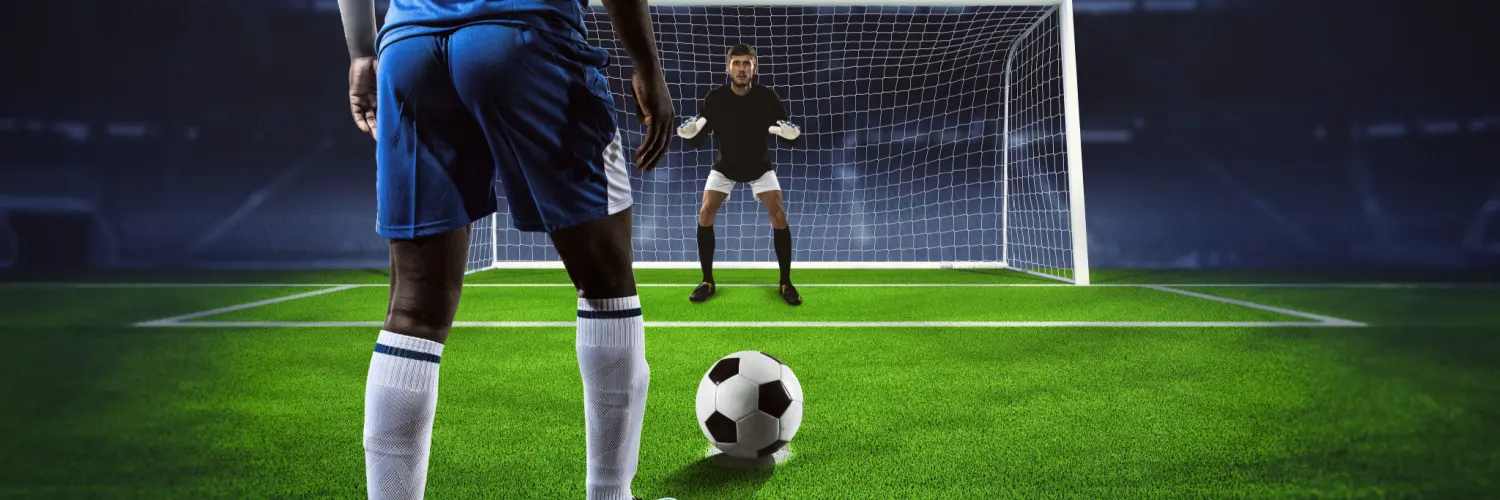
Penalties look simple on TV—a shot from twelve yards with only the goalkeeper to beat—but the current laws around how they are taken, defended, and retaken are far more intricate than most viewers realise. Those details quietly decide whether a miss turns into a scramble, a save leads to a retake, or encroaching defenders get punished, and once you understand them, every spot kick becomes a mini‑story of risk management rather than a coin flip.
Why Penalties Exist And What They Are Trying To Fix
The penalty kick exists to turn certain fouls inside the box into a clear, high‑value scoring chance, restoring a goal opportunity that was unfairly removed. Instead of just awarding a free kick in a crowded area, the law isolates the attacker and goalkeeper at a fixed distance, dramatically increasing the probability of a goal and discouraging desperate fouls near goal. That imbalance is deliberate; it makes defenders think twice before pulling shirts, clipping heels, or blocking shots with arms in positions that clearly increase their body surface.
From a viewing perspective, this means a penalty is not a “lottery” but the rulebook’s way of saying the attack had been denied such a strong chance that it deserves something close to a one‑on‑one with the goalkeeper. When you see repeated fouls in the box that go unpunished, you are watching that intended deterrent effect start to erode, which is why referees and VAR are under pressure to apply Law 14 and its related fouls consistently.
What Must Happen Before A Penalty Can Be Taken
Before the whistle even goes, several precise conditions must be met under Law 14. The ball has to be stationary on the penalty mark, the goal frame must not be moving, and the referee must clearly identify who will take the kick. The goalkeeper must stand on the goal line between the posts, facing the kicker, and all other players must be outside the penalty area, outside the penalty arc, behind the ball, and at least 9.15 metres from the spot.
These apparently bureaucratic details matter because any infringement—by the goalkeeper or either team’s outfield players—can change whether the kick counts, is retaken, or leads to an indirect free kick the other way. When you watch closely, you can often see referees delaying the whistle to move players back or to warn the goalkeeper, which is your first hint that encroachment or illegal distraction might factor into the decision if the kick has to be reviewed.
How Goalkeeper Movement Really Works, Not How It Looks On TV
One of the most misunderstood rules concerns what the goalkeeper is allowed to do before the ball is struck. Under the current wording, the keeper must have at least part of one foot touching, in line with, or behind the goal line at the moment the ball is kicked, but they are free to move laterally along the line. They are also explicitly forbidden from behaviour that unfairly distracts the kicker, such as shaking the crossbar or delaying the kick excessively once the referee has signalled.
Because television replays often focus on whether both feet are clearly behind the line, many viewers assume any small step forward should automatically mean a retake. In reality, enforcement focuses on whether the keeper gained a clear illegal advantage and whether their foot position at the instant of contact meets the “at least part of one foot” standard. When watching live, you can usually tell that a keeper is inviting trouble if they take a big hop forward just before the strike or repeatedly touch the frame; those actions sit right on the boundary of what Law 14 is trying to restrict.
Encroachment: Who Steps In Too Early And What Actually Happens Next
Encroachment—players entering the penalty area, arc, or moving in front of the ball before it is kicked—is another area where fan expectations often diverge from the law. Any attacker or defender who steps in too early is technically committing an offence, but what matters for the restart is who encroached and whether they became involved in the outcome of the kick. If only attackers encroach and the penalty is scored, the usual sanction is to retake the kick; if attackers encroach and the kick is missed or saved without them interfering, play often restarts with an indirect free kick to the defence.
When only defenders encroach and the penalty is scored, the goal usually stands, because their early movement did not prevent a goal. But if defenders encroach and the kick is missed or saved, and one of those early runners plays the ball or blocks a rebound before the attackers can react, the law expects a retake because their illegal presence changed the outcome. Watching carefully, you can often see referees and VAR looking not just at feet on lines but at who touches the rebound first, which explains why some apparently similar cases lead to retakes and others do not.
Why Rebounds And “Second Chances” Are So Controversial
Another frequent misconception is that the penalty ends the moment the first shot is saved or hits the woodwork. In open play, the kick continues until the ball stops, leaves the field, or the referee blows for an offence; if it rebounds from the goalkeeper or frame back into play, anyone who obeyed the encroachment rules can play it, including the original taker after a legitimate touch from another player. The only direct prohibition is on the taker touching the ball a second time before anyone else, which leads to an indirect free kick if they shoot the rebound straight away without an intervening touch.
Many fans perceive rebound goals as a kind of “double punishment” for the defence, which is partly why IFAB has considered proposals to remove second chances entirely and make penalties a one‑shot event, with play restarting from the goalkeeper if the ball does not go in. For now, though, the existing law means that chaos after a save is fully live ดูบอลสดออนไลน์ changy, not a glitch, and tracking which players stayed outside the area until the kick lets you anticipate who is legally allowed to pounce on loose balls.
What Would Change If Rebound Goals Were Removed?
If IFAB’s discussed reform—no rebounds after penalties in regular play—were ever adopted, it would significantly alter how both attackers and goalkeepers approach spot kicks. Attackers would know they get exactly one contact, pushing them toward safer finishes rather than mind‑games that rely on winning the race to a rebound. Goalkeepers, meanwhile, could focus entirely on the first save without worrying about pushing the ball into dangerous central zones, because any non‑goal would simply end with a restart in their favour.
For viewers, this would simplify the decision tree after every penalty: either it is a goal, or it isn’t, with no need to track encroachment impact on rebounds or second touches from the taker. Until such a change happens, however, it remains vital to see the post‑save scramble as governed by the same laws on encroachment and second touches, which explains why some messy follow‑ups stand and others are brought back.
Why Watching Full Matches Is The Only Way To Grasp Penalty Patterns
Many of the most interesting penalty incidents never make highlight reels because they do not end in spectacular goals or obvious howlers. When you follow full matches, you see the build‑up: repeated small pulls on attackers in the box, warnings from the referee about grappling at corners, and earlier decisions that set the tone for whether borderline contact will be punished later. You also see how long referees take to manage positioning before a kick, which often predicts whether encroachment or goalkeeper movement will be under special scrutiny.
If you routinely ดูบอลสด instead of jumping in only for viral clips, you notice patterns such as particular teams timing their runs from the edge of the area perfectly, or keepers who push the limits of the one‑foot‑on‑the‑line rule without getting caught. Over a season, those trends become part of how you read a team’s penalty record alongside xG: not just how many they score, but how they manage the micro‑rules around each kick, from feints in the run‑up to how calmly they handle retakes.
A Simple Live‑Viewing Checklist For Penalty Incidents
Because spot‑kick decisions involve multiple moving parts, it helps to have a small framework in mind when a penalty is awarded so you can follow the logic of whatever happens next. Rather than reacting only to the shot, you can track goalkeeper feet, runner timing, and second touches, then compare the referee’s call to what Law 14 actually requires. This makes every penalty a structured mini‑analysis instead of a pure emotional spike.
A practical sequence is:
- Check if all outfield players stay outside the box and arc, behind the ball, before the whistle.
- Watch the goalkeeper’s feet at the instant of the kick: is at least part of one foot on or behind the line.
- Note whether any attackers or defenders clearly encroach and then play the rebound.
- See who touches the ball after the initial shot: goalkeeper, frame, taker, or another player.
- Compare the referee’s decision—goal, retake, indirect free kick—to those details.
Running through this list during live matches quickly trains your eye to spot the same infringements referees and VAR are looking for. Over time, you become less surprised by retakes or disallowed rebounds, because you already saw the encroaching runner or the second touch from the taker that made them inevitable under the law.
Summary
Modern penalty rules are built on a tight set of conditions governing ball placement, player positions, goalkeeper movement, and what happens after the shot, and each small infringement can change whether a goal stands, a kick is retaken, or play restarts the other way. Misunderstandings about encroachment, rebounds, and keeper footwork fuel much of the confusion you hear from commentators and fans, but those grey areas shrink once you watch spot kicks with Law 14’s structure in mind rather than focusing only on the finish. When you follow full matches and apply a simple live‑viewing checklist, penalties stop feeling like random drama and instead become one of the most readable, rule‑driven set pieces in the game’s tactical and psychological landscape.