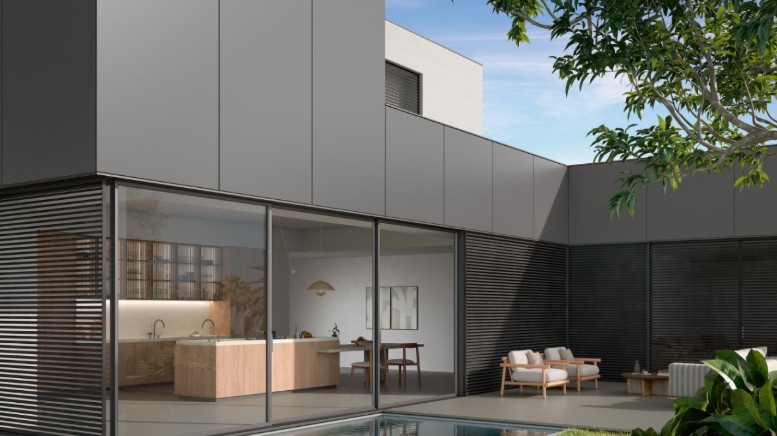
Commercial buildings are increasingly evaluated on both function and appearance. Commercial facade design focuses on creating exteriors that are durable, low-maintenance, and visually striking. Traditional materials often struggle to meet these combined demands, making engineered stone panels an ideal solution. These panels provide a balance of strength, elegance, and design flexibility, allowing modern buildings to achieve a distinctive look while ensuring long-term performance and reliability.
Benefits of Commercial Façade Design
Beyond aesthetics, engineered stone panels offer practical advantages that make them a preferred choice for contemporary commercial architecture:
- Low Maintenance: The material resists staining, fading, and surface wear, reducing long-term maintenance costs and effort. Cleaning routines are simple, and the façade remains visually consistent for years.
- Sustainability: Many engineered stone solutions are manufactured with environmental responsibility in mind, meeting standards such as NSF and IGBC certifications. This allows designers to incorporate green practices without compromising on design.
- Ease of Installation: Large-format panels are designed for efficient installation, minimizing downtime and labor costs. Modular designs and pre-finished surfaces allow for faster project completion.
- Weather and Pollution Resistance: Engineered stone withstands harsh environmental conditions, including UV exposure, rain, wind, and industrial pollution. Its stable performance ensures that façades retain their intended design impact over decades.
- Flexibility in Design Integration: Panels can integrate seamlessly with other building elements like glass, metal, and concrete, allowing for sophisticated combinations that reinforce a modern aesthetic.
The combination of low maintenance, sustainability, and resilience ensures that engineered stone panels deliver lasting performance, enabling façades that remain both beautiful and practical over time.
Why Engineered Stone Panels Are Leading?
Engineered stone panels are at the forefront of commercial facade design due to their unique combination of durability, aesthetics, and versatility. Their large-format slabs create seamless, sleek surfaces, while precise color consistency and varied textures allow architects to craft visually striking exteriors. Resistant to weather, pollution, and daily wear, these panels ensure long-lasting performance with minimal maintenance. Additionally, sustainable manufacturing practices, ease of installation, and compatibility with other materials like glass and metal make engineered stone the preferred choice for modern, high-impact commercial façades.
Modern Features of Engineered Stone Panels
Engineered stone panels bring several design-forward qualities that make them ideal for contemporary commercial façades:
- Durability and Strength: Engineered stone is exceptionally resilient against weather, pollution, and physical impact. Unlike conventional materials, it maintains its integrity without warping, cracking, or fading over time, making it a dependable choice for high-traffic areas.
- Large-Format Slabs: One of the most compelling trends in commercial facade design is the use of expansive slabs. These large-format panels create seamless surfaces that minimize joints, giving buildings a sleek, uninterrupted appearance that communicates sophistication and precision.
- Seamless Finishes: Smooth, continuous finishes enhance visual cohesion across the façade. Seamless panels reduce maintenance concerns, prevent water ingress, and create an impression of effortless elegance.
- Color Consistency: Contemporary designs rely heavily on precise color palettes to evoke desired moods or brand identities. Engineered stone panels offer uniformity, allowing architects to maintain consistent aesthetics across extensive surfaces.
- Versatile Textures and Finishes: Beyond color, these panels can mimic natural textures or embrace modern matte, polished, or satin finishes, providing architects with complete creative freedom.
These qualities make engineered stone panels a forward-looking choice, combining durability, aesthetics, and versatility to meet the evolving demands of contemporary commercial façades.
Applications Across Commercial Projects
Engineered stone panels are highly adaptable, making them suitable for a variety of facades for building applications:
- Corporate Offices and Skyscrapers: Sleek, reflective panels help create a modern corporate identity, while textured finishes add depth to otherwise minimalist designs. Large-format slabs ensure minimal disruption to the visual flow of the building exterior.
- Retail Spaces and Showrooms: Uniform, eye-catching facades attract attention and reinforce brand imagery. The material’s low-maintenance nature ensures that high-traffic locations maintain their visual appeal over time.
- Institutional Buildings: Universities, libraries, and cultural centers benefit from engineered stone’s durability and versatility, creating exteriors that balance light, shadow, and surface depth while enduring heavy public use.
- Mixed-Use Developments: Combining residential, office, and retail spaces in a single complex requires façades that communicate cohesion. Engineered stone panels enable designers to maintain a consistent aesthetic while allowing for subtle variation through textures and finishes.
- Accent and Structural Elements: Panels are also ideal for entryways, columns, curtain walls, and other feature elements. Their flexibility ensures that even small details contribute to a unified architectural statement.
By adapting to diverse building types, engineered stone panels provide architects the flexibility to create cohesive, visually striking, and functional façades across offices, retail, institutions, and mixed-use developments.
Advanced Solutions for Next-Generation Façades
Innovative surfaces, such as Neotra Advanced Surfaces, offer architects additional flexibility when planning commercial facade designs. These solutions combine large-format slabs, precise color consistency, and seamless finishes to simplify complex projects. They exemplify the growing trend of materials that are not only beautiful but also functional, reliable, and aligned with high design standards. Many of these surfaces meet NSF and IGBC certification standards, ensuring sustainability, safety, and environmental responsibility while supporting architects in creating visually striking, long-lasting façades.
Innovations in Commercial Façade Architecture
The future of commercial facade design lies in marrying aesthetic expression with long-term performance. Engineered stone panels are setting the benchmark by offering a combination of scale, durability, and visual refinement that traditional materials struggle to achieve. Architects now have the freedom to create buildings that are both bold and enduring, turning façades into defining elements of a cityscape rather than mere structural necessities.
Large-format panels, seamless finishes, and advanced surface technologies are enabling façades that interact dynamically with light, shadow, and surrounding spaces. Whether the goal is to convey transparency, solidity, or a nuanced interplay of textures, engineered stone panels provide a foundation for design innovation.
Conclusion
In modern commercial architecture, façades serve as a canvas for design, identity, and innovation. Engineered stone panels combine elegance, durability, and practicality, enabling architects to create visually striking, long-lasting exteriors. Large-format slabs, seamless finishes, and consistent colors enhance sophistication while simplifying maintenance. As urban skylines evolve, buildings are increasingly judged by the quality and longevity of their façades. Thoughtful use of engineered stone ensures functional, sustainable, and timeless exteriors that reflect contemporary architectural excellence.