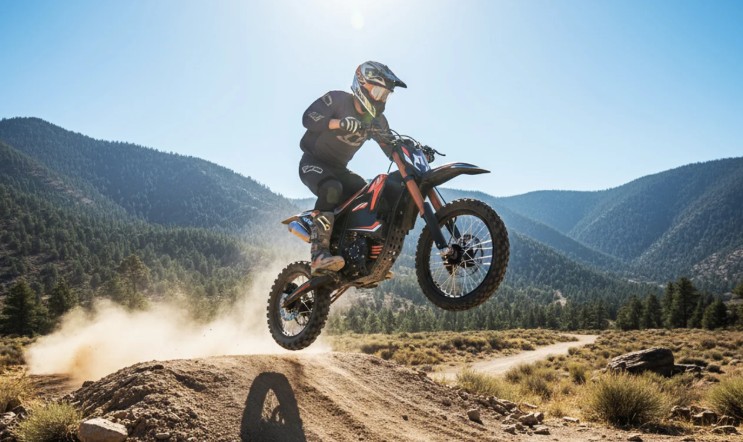
Top speed is often the first number riders notice, but it is also one of the easiest to misunderstand. On paper, a higher speed suggests stronger performance and better capability. In reality, that number rarely tells the full story. Once a bike leaves controlled testing conditions and enters real riding environments, the difference between claimed speed and usable speed becomes much more noticeable.
Why Speed Numbers Matter So Much to Buyers
Speed has become a shorthand for performance. It is simple, easy to compare, and widely used in product listings. For many riders, especially those new to the category, it feels like the most reliable way to judge whether a bike is powerful or not. A model advertised at 50 mph immediately appears more capable than one listed at 40 mph, even if the real-world difference is less significant than expected.
This focus is also reinforced by how information is presented. Speed is often highlighted first, while other aspects such as control or stability require more explanation. As a result, riders naturally gravitate toward what is easiest to understand, even if it only represents a small part of the riding experience.
Why Reported Top Speeds Don’t Always Reflect Real Riding
Most electric dirt bikes on the market today fall within a broad speed range of about 30 to 60 mph, depending on design and power output. However, these figures are typically measured under ideal conditions. In real riding situations, several factors can reduce achievable speed, sometimes significantly.
Rider weight plays a direct role. A heavier rider requires more power to reach the same speed, especially when acceleration is involved. Terrain also has a major impact. Loose surfaces, inclines, and uneven ground all increase resistance, making it harder to maintain higher speeds. Battery level is another factor. As the charge decreases, performance can become less consistent, which affects how fast the bike can realistically go.
Because of these variables, the speed a rider actually experiences is often lower than the number used for comparison. This does not mean the data is incorrect, but it does mean it is incomplete.
How Testing Conditions Can Make Speeds Look Higher
The conditions under which speed is measured are often optimized to produce the best possible result. Testing is typically done on flat, hard surfaces with minimal resistance. The rider weight may be lower than average, and the battery is fully charged. Under these circumstances, the bike is able to reach its maximum potential without interference.
This is very different from real-world riding. Even small changes in surface or incline can affect performance. What looks achievable in a controlled environment may feel very different once variables are introduced. This gap is where many misunderstandings come from. The number itself is not misleading, but the context around it is often missing.
Power Delivery Matters More Than Peak Speed
As riders spend more time on the bike, the importance of peak speed begins to fade. What matters more is how power is delivered during normal riding. A bike that accelerates smoothly and responds predictably is easier to control and more enjoyable over time.
On a well-designed electric dirt bike, the connection between throttle input and response is consistent, which allows riders to adjust naturally without hesitation. This creates a sense of control that cannot be measured by top speed alone. In contrast, a bike that feels abrupt or uneven may be harder to manage, even if its maximum speed is higher.
This is why experienced riders often focus less on the top number and more on how the bike behaves across a range of speeds.
Why Riders Rarely Use Top Speed in Real Conditions
In everyday use, riders rarely reach or maintain top speed for extended periods. In urban environments, traffic and road conditions limit how fast it is practical to ride. Speeds above 30 mph are often unnecessary for short-distance commuting, where control and maneuverability are more important.
Off-road riding presents a different set of limitations. Surfaces such as dirt, gravel, and sand require constant adjustment, making it difficult to maintain high speed safely. In these conditions, riders rely more on torque and control than on maximum velocity. Having the ability to accelerate when needed is useful, but sustaining top speed is rarely the goal.
What Actually Defines Real-World Performance
Real performance is defined by how the bike handles changing conditions, not just how fast it can go under ideal circumstances. Stability, control, and consistency all play a role in shaping the riding experience. A bike that performs reliably across different environments will feel more capable than one that excels only in specific situations.
This is where the difference between specification and experience becomes clear. A fastest electric dirt bike may offer impressive numbers, but what matters more is how that performance translates into everyday use. Riders are more likely to value a bike that feels predictable and adaptable than one that simply delivers higher peak output.
How Electric Dirt Bikes Are Changing Performance Expectations
Electric platforms are gradually shifting how performance is understood. Instead of focusing on a single metric, more attention is being placed on how the bike responds in real conditions. Immediate torque, smooth acceleration, and consistent output allow riders to manage speed more effectively.
Some newer approaches in the market, including those explored by Qronge, reflect this shift toward usability. The emphasis is less on reaching the highest possible speed and more on making that speed accessible and controllable across different scenarios. This change aligns more closely with how riders actually use their bikes.
Real Performance Is Felt, Not Just Measured
At the end of a ride, the number on a spec sheet is rarely what stands out. What remains is the overall feeling of the experience. Whether the bike felt stable, whether it responded as expected, and whether it allowed the rider to stay relaxed and in control all leave a stronger impression than peak speed.
That is why speed alone can be misleading when used as the main point of comparison. It is a useful reference, but not a complete measure of performance. A bike that feels natural and consistent in real conditions will always provide a better riding experience than one that only performs well under ideal circumstances.