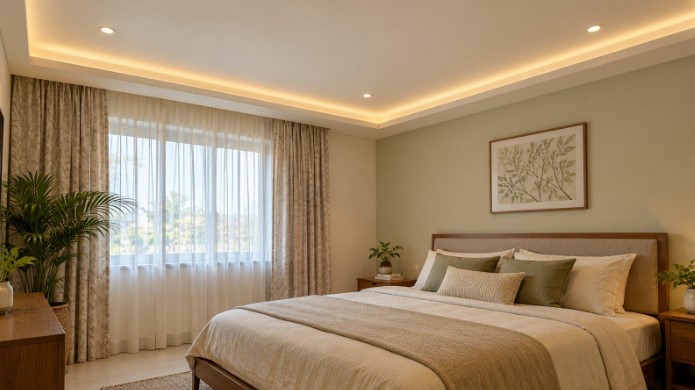
A low bedroom ceiling can cut down your design choices, especially if you want to add decorative details overhead. Still, the right false ceiling design for bedroom interiors can bring in a fresh look and make better use of lighting. The key is to pay attention to how much height you can spare. For instance, a simple POP ceiling or a slim border with cove lighting may suit your room better than a heavily layered design.
Before picking a style, take a look at your ceiling height, fan placement and the kind of lighting you prefer. With these points in mind, let us look at the false ceiling designs that work best for bedrooms with limited ceiling height.
Which False Ceiling Designs Are Suitable for Bedrooms With Low Ceilings?
Bedrooms with low ceilings generally require simple false ceiling designs that use minimal layers and leave adequate headroom. A slim POP border, a single-level ceiling or a small feature above the bed can introduce some detail without taking up too much vertical space.
1. Single-Layer False Ceiling
A single-layer false ceiling is a sensible choice when the bedroom ceiling is already low. Its flat finish keeps the design simple, and you can add recessed lights at suitable points to brighten the room. It also works with different interior styles, from a basic bedroom setup to a more modern look. Keep the design free of heavy mouldings, especially if the room is compact.
2. Slim Border Ceiling With Cove Lighting
If a plain ceiling feels excessively bare, try a narrow border around the edges. Cove lighting tucked into the border can cast a gentle glow across the ceiling. It also gives the room a softer look in the evening. Just make sure the dropped section is shallow, as a deep border can take away more height than you may expect. Warm white lighting works well for a restful bedroom atmosphere.
3. Partial False Ceiling Above the Bed
You don’t always need to cover the entire ceiling. A partial design above the headboard can draw attention to the bed and give the room a clear focal point. Keep the feature compact and coordinate its finish with the wall behind it. For instance, a 3 colour combination of warm white, beige and muted sage can bring the ceiling, walls and bedding together without introducing too many competing shades.
4. Minimal POP Ceiling Design
A simple POP design with a neat outline or a small recessed section brings character without elaborate layers. Choose a light ceiling colour and plan the fan and light positions before installation. This helps the finished design look tidy and keeps everyday use practical.
What Should You Avoid in a False Ceiling Design for a Low Bedroom?
When planning a false ceiling for such rooms, do not go for designs that take up too much height or add unnecessary visual weight to the room.
- Deep, multi-layered ceilings- Several dropped levels can reduce the available headroom. Thus, stick to a single layer or a shallow border.
- Bulky hanging lights- Large chandeliers and pendant lights can dominate a bedroom with restricted vertical space. Slim ceiling lights are usually a more practical choice.
- Heavy mouldings and elaborate patterns- Thick borders and detailed POP work can make the ceiling look crowded. Simple lines tend to work better here.
- Dark ceiling colours- Deep shades can make the ceiling appear lower in rooms that have less natural light. White, ivory and other pale colours are easier to work with.
- Poorly planned fan placement- Check the ceiling fan’s clearance before installation. The false ceiling should not interfere with the fan, wardrobes or air-conditioning fittings.
- Too many recessed lights- Excessive lighting points can clutter the design. Plan their placement around the bed and other areas that need good visibility.
How Can Lighting and Colour Make a Low Bedroom Ceiling Feel Higher?
A bedroom with a low ceiling needs a bit of thought when it comes to paint and lighting. Even small choices, such as the colour above your head or the type of light fitting you install, can change how the room looks.
- Go for a lighter ceiling shade. White is a common choice, but ivory and pale beige work just as well. These shades keep the ceiling bright, particularly in bedrooms that don’t get much sunlight.
- Keep the lights close to the ceiling. Recessed lights are useful here because they don’t hang down into the room. You can spread them across the ceiling to light up different areas.
- Use cove lighting sparingly. A narrow strip around the edges can give the ceiling a gentle glow in the evening. Just avoid a deep false ceiling to accommodate it, as that takes away more height.
- Try similar shades on the walls and ceiling. A sharp colour contrast can draw attention to the ceiling line. Using related shades creates a more connected look.
- Don’t block the windows. Heavy curtains can cut down on daylight, so choose a style that lets sunlight into the room during the day.
- Think about your evening lighting. A single bright light may leave corners looking dull. A combination of ceiling lights and bedside lamps can make the room more comfortable.
Conclusion
Low ceilings do call for a few practical choices, but that doesn’t mean you have to settle for a plain bedroom. A simple POP design, light paint and well-placed fixtures can work together nicely. Before choosing your false ceiling design for bedroom, check how much height the installation will use and make sure there’s enough clearance for the fan and other fittings.